Why Does the Renter vs Homeowner Solar Comparison Matter?
The standard narrative is that homeowners win at solar. They get big rooftop systems, net metering, property value increases, and 25-year warranties. Renters get... portable panels on a balcony. End of story. (Note: The federal residential solar tax credit expired at the end of 2025, so the old homeowner advantage of a 30% federal subsidy no longer applies.)
That narrative is incomplete. It compares the scale of savings without comparing the scale of investment. A $20,000 rooftop system saving $1,500 per year is a 13-year payback. A $700 portable kit saving $200 per year is a 3.5-year payback. The homeowner saves more in absolute terms. The renter often wins on return on investment, especially in the first five years.
This matters because millions of renters are sitting out of solar entirely because they believe they cannot participate meaningfully. That belief is wrong. Renter solar is smaller in scale, but it is real in economics. You just have to evaluate it on the right terms.
How Do Renter and Homeowner Solar Compare Side by Side?
| Factor | Renter Portable Solar | Homeowner Rooftop Solar |
|---|---|---|
| Typical upfront cost | $500 to $2,000 | $15,000 to $30,000 |
| Federal tax credit | Not applicable (credit expired 2025) | Expired December 31, 2025 (Section 25D eliminated) |
| Annual savings (avg) | $150 to $600 | $800 to $2,500 |
| Typical payback period | 2 to 5 years | 9 to 15 years (no federal credit; state incentives vary) |
| System complexity | Low (plug and play) | High (permits, contractor, utility approval) |
| Portability | Fully portable | Permanently attached to roof |
| Property value impact | None | +3% to 4% on average |
| Outage backup | Yes (with battery) | Only with separate battery system |
| Time from decision to savings | 1 to 3 days | 30 to 120 days (permitting) |
| Who it works for | Renters, all 50 states | Homeowners with suitable roof |
What Is the Upfront Cost Reality for Renter vs Homeowner Solar?
The average residential rooftop solar installation in the US costs about $20,000 as of 2026, according to SEIA industry data. The federal residential solar tax credit (Section 25D) expired at the end of 2025, so homeowners no longer receive a 30% federal subsidy. State incentives vary — some states still offer substantial rebates — but the full sticker price is now closer to the real net cost for many buyers. That is a substantial capital commitment, and it comes before financing costs if the homeowner uses a solar loan or lease.
Renter solar starts at a fraction of that. A capable portable setup for an apartment renter, say an EcoFlow DELTA 2 with a 220W panel, costs about $900 to $1,100 total. A more budget-conscious Jackery Explorer 1000 bundle runs $700 to $900. Even a premium 800W balcony setup stays under $2,000 for most configurations.
The gap is enormous: $700 vs $20,000 (or whatever remains after any available state incentives). That gap is why return on investment often favors the renter in the early years, even though the absolute savings are lower.
What Does the 5-Year Solar Savings Projection Show?
| Year | Renter: cumulative net position | Homeowner: cumulative net position |
|---|---|---|
| Start | -$900 (equipment cost) | -$20,000 (no federal credit; state incentives vary) |
| Year 1 | -$900 + $240 saved = -$660 | -$14,000 + $1,400 saved = -$12,600 |
| Year 2 | -$660 + $240 = -$420 | -$12,600 + $1,400 = -$11,200 |
| Year 3 | -$420 + $240 = -$180 | -$11,200 + $1,400 = -$9,800 |
| Year 4 | -$180 + $240 = +$60 (PAID BACK) | -$9,800 + $1,400 = -$8,400 |
| Year 5 | +$60 + $240 = +$300 net profit | -$8,400 + $1,400 = -$7,000 |
These projections use: renter system cost $900, renter annual savings $240 (400W system at 15 cents/kWh), homeowner system cost $20,000 (the federal residential tax credit expired in 2025; apply any available state incentives for your state), homeowner annual savings $1,400. Your numbers will vary based on electricity rates from EIA data and local sun hours per NREL PVWatts.
At the 5-year mark: the renter is $300 ahead. The homeowner is still $7,000 in the hole. In high-electricity-cost states (California, New York, Massachusetts), the homeowner's annual savings are higher, and they may break even in year 8 or 9 instead of year 10 or 12. But the renter still breaks even much faster because the investment is so much smaller.
What Does the 10-Year Solar Savings Projection Show?
| Year | Renter cumulative savings (after payback) | Homeowner cumulative savings (after payback) |
|---|---|---|
| Year 5 | +$300 net ahead | -$7,000 still behind |
| Year 7 | +$780 net ahead | -$4,200 still behind |
| Year 10 | +$1,500 net ahead | -$420 (nearly paid back at year 10) |
| Year 15 | +$2,700 net ahead | +$6,580 net ahead |
| Year 20 | +$3,900 net ahead | +$13,580 net ahead |
| Year 25 | +$5,100 net ahead | +$20,580 net ahead |
At year 25, the homeowner wins on absolute dollar savings. A rooftop system that lasts its full design life generates far more total value than a portable kit. But this is only meaningful if the homeowner stays in the same house for 25 years. The average American moves every 8 years. Rooftop solar adds value to the home when sold, but the savings trajectory shown above assumes continuous residency.
For a renter who buys a portable kit today and eventually buys a home, the kit goes with them. They capture renter savings now and homeowner savings later when they eventually install rooftop solar. The portable kit is not a consolation prize. It is a bridge that works in both living situations.
What Can't Renters Get from Portable Solar?
This comparison would be incomplete without being honest about what portable solar does not do.
Portable solar does not offset your entire electric bill. A 400W system in a sunny location generates roughly 1.5 to 2 kWh per day during peak season, per NREL PVWatts data. The average apartment uses 500 to 800 kWh per month. Portable solar offsets a fraction of that, not all of it. Renters who expect to eliminate their electric bill from a balcony panel will be disappointed.
The federal residential solar tax credit (Section 25D) expired at the end of 2025 after the One Big Beautiful Bill Act was signed into law — so neither portable nor rooftop residential systems qualify for a federal credit anymore. This actually levels the playing field somewhat: the previous homeowner advantage of a 30% federal subsidy is gone. Focus on what's still available: state rebates, net metering (where available), and community solar subscriptions.
And portable solar does not add property value. Research from Lawrence Berkeley National Laboratory shows rooftop solar adds roughly $15,000 to home value on average. This matters more to people who own homes than renters, but it is worth noting that the homeowner's solar investment has a residual value when the home is sold. Portable equipment has a secondary market value, but it is modest compared to an installed rooftop system.
What Do Renters Gain from Solar That Homeowners Don't?
The comparison is not all negative for renters. Here is what portable solar gives renters that homeowners do not have:
- Speed: Renter solar is operational in days. Homeowner solar takes months of permitting, installation, and utility interconnection approval.
- Flexibility: If you move to an apartment with better sun exposure, your system gets better. If the homeowner moves, their rooftop system stays on the roof.
- No lender dependency: Many homeowners finance rooftop solar with loans at 5% to 10% interest, which significantly extends payback and adds financing risk. Renter systems are typically cash purchases under $1,500.
- Lower risk: If an $800 portable kit underperforms expectations, the downside is limited. If a $20,000 rooftop system is installed on a house that gets sold in two years before payback, the economics get complicated.
- Outage power: A portable system with a battery gives renters backup power during outages. Most homeowner rooftop systems, without a separate battery bank, go offline when the grid goes down for safety reasons.
Why Should Renters Compare Solar Returns, Not Absolute Savings?
The homeowner wins on total dollar savings over 25 years. No question. But that is the wrong metric for a renter to use when making a decision today.
The right question is: what return can I get on the money I actually have? If you are a renter with $900 to spend, your choice is not between $900 of portable solar and a $20,000 rooftop system. It is between $900 of portable solar and doing nothing. On that comparison, portable solar wins clearly: 3 to 5 year payback, real ongoing savings, hardware you own and can take anywhere.
The incentives landscape is also tilting toward renters. State DSireUSA-listed programs increasingly include community solar credits, renter-specific rebates, and portable solar incentives in some states. The gap between renter and homeowner solar policy is narrowing. For now, renters still need to build their case from economics rather than tax credits. But the math works.
If you want to explore your specific numbers, use the Savings Calculator tool with your electricity rate and location. And read the solar incentives for renters guide to see what programs might apply in your state.
About the RenterSolar Team
We track solar laws, incentives, and products across all 50 states specifically for renters. Our data comes from DSireUSA, the U.S. Energy Information Administration, NREL, and direct review of state legislation. We are independent and not affiliated with any solar manufacturer. Learn more about us.
Last verified: March 2026
Frequently asked questions
Does renter solar save as much money as homeowner solar? +
No, not in absolute terms. Homeowners can save $1,000 to $2,500 per year with rooftop solar. Renters typically save $150 to $600 per year with portable systems. But the return on investment is often comparable in the first 5 years because renter systems cost 10 to 20 times less upfront. Payback for renters often comes in year 3 to 5 versus year 7 to 12 for homeowners.
Can renters claim the federal solar tax credit? +
The federal residential solar tax credit (Section 25D) expired at the end of 2025 after the One Big Beautiful Bill Act was signed into law. It is no longer available for anyone — renters or homeowners. Focus on state rebates, community solar programs, and the direct savings from reducing your electricity bill.
Is renter solar worth it compared to waiting to buy a home? +
For most renters, yes. Portable solar has a fast payback, and the equipment moves with you. If you eventually buy a home, your portable kit still works there. You are not choosing between renter solar now and homeowner solar later. You can have both.
What is the biggest difference between renter and homeowner solar? +
Scale and permanence. Homeowner rooftop solar is large, permanent, permit-required, and generates thousands of kilowatt-hours per year. Renter solar is small, portable, no-permit, and generates hundreds of kilowatt-hours per year. Both cut electricity costs, but at very different investment levels and savings scales.
Ready to take the first step?
These are the kits renters actually buy. Portable, removable, no landlord needed.
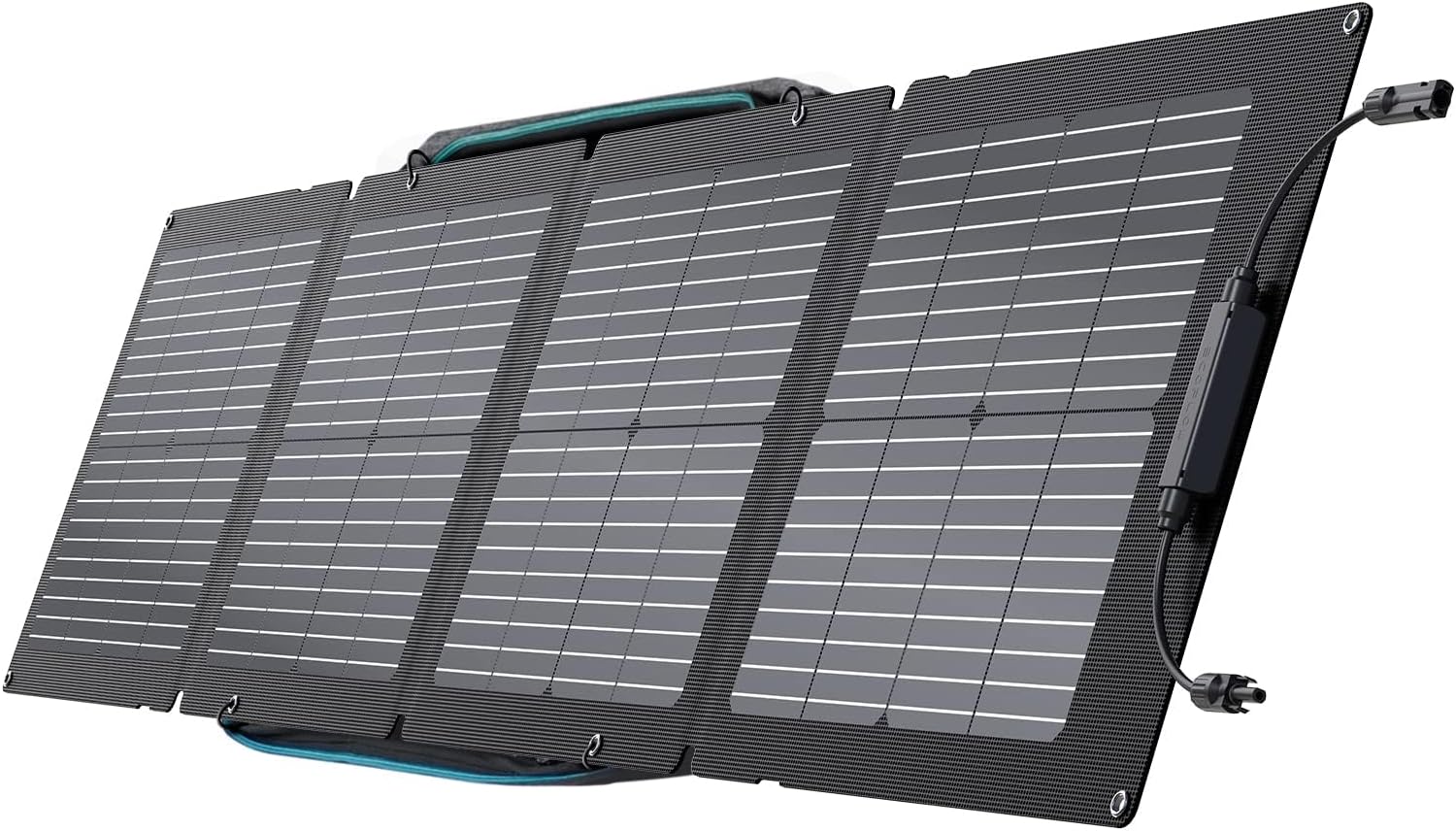
EcoFlow 110W Panel
Foldable, 23% efficiency, IP68. Saves ~$10-18/mo. Great starting point.
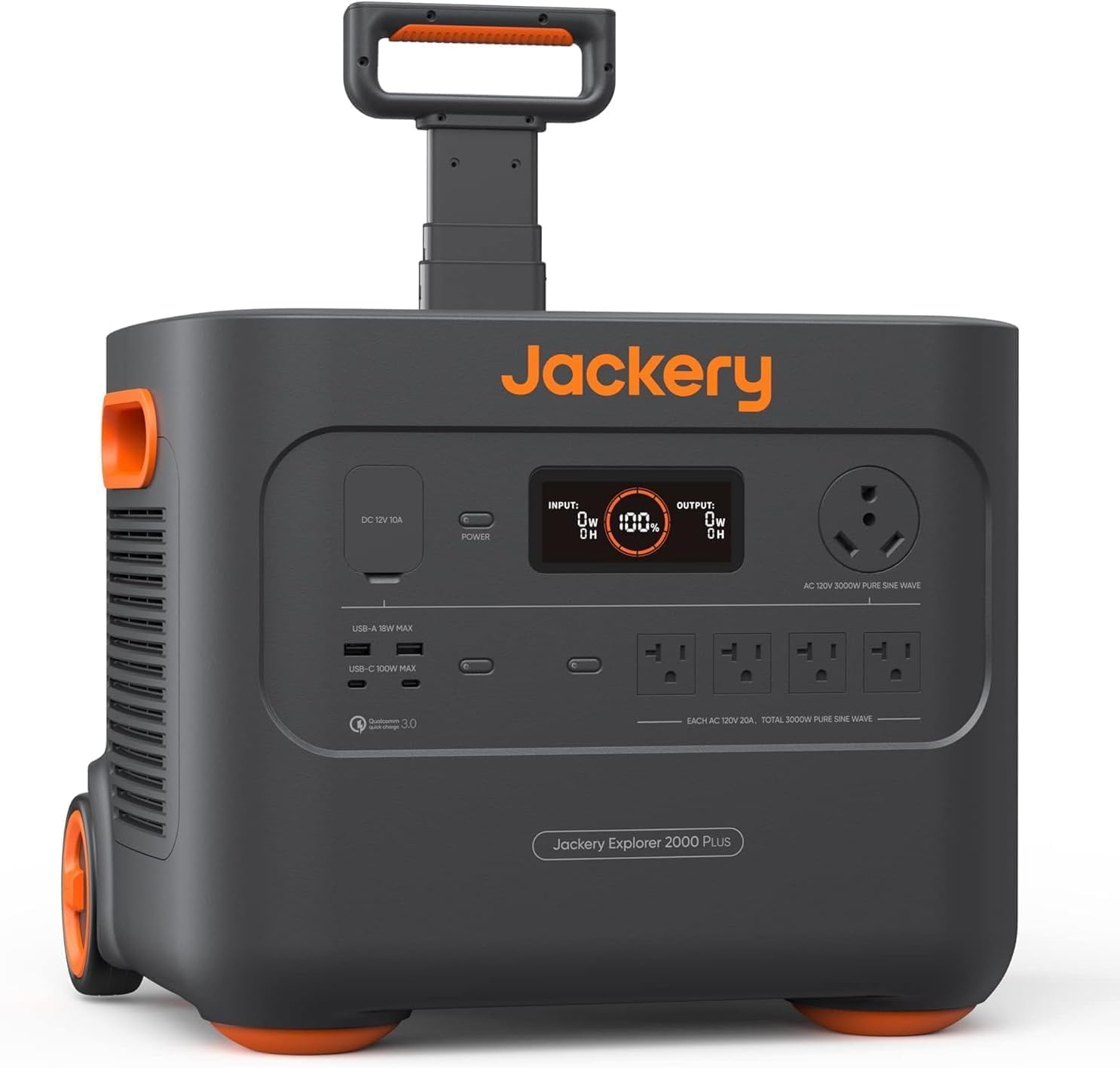
Jackery Explorer 2000 Plus
2042Wh LiFePO4, 3000W. Battery + panel. Saves ~$40-60/mo.
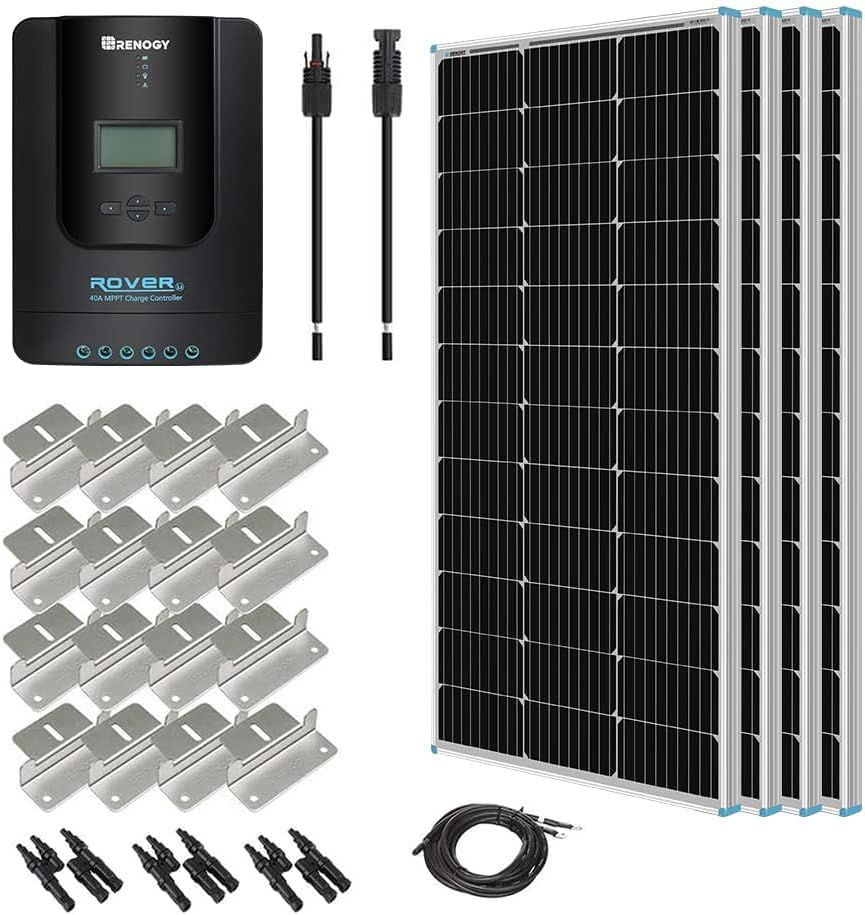
Renogy 400W Starter Kit
4x100W panels + MPPT controller. Most power per dollar. Saves ~$30-50/mo.
Affiliate links support free content. You pay the same price. Full disclosure