⚡ Quick Answer
The 44 million renter households in America pay rising electricity bills with zero control over their energy source — and portable solar kits starting at $200 are changing that faster than the rooftop industry ever did. RenterSolar believes renters are leading the real solar revolution because they're proving you don't need a roof, a mortgage, or a $25,000 system to generate your own power.
Affiliate disclosure: Some links on this page are Amazon affiliate links. If you click through and buy something, Amazon pays us a small commission. You pay exactly the same price. not a penny more. The only person who gets a dollar less is Jeff Bezos, and at his net worth, he will survive. We use these commissions to keep this site free, independent, and honest.
Get the Renter Solar Newsletter
Weekly insights on renter solar rights, new products, and real savings stories. Free. No spam. Unsubscribe anytime.
Why Does Every Solar Article Assume You Own a Roof?
Go ahead. Search "solar for beginners." Every result will walk you through installer quotes, payback periods on $20,000 rooftop systems, and what the panels will do to your home's resale value.
It all assumes you own something.
What if you don't? What if you're one of the 44 million (U.S. Census) renter households in America, paying your electricity bill every single month while having zero say in where that electricity comes from and zero shot at benefiting from the rooftop revolution everyone keeps talking about?
That's the gap this site exists to fill. And the more you look at it, the clearer it gets: renters aren't just being left out of the solar story. Renters are the people who need solar the most. and they're standing at the leading edge of what comes next.
What Is the Rental Trap of Paying for Power You Can't Control?
Here's what the rental experience looks like for most people. You move into an apartment. You don't get to choose the utility provider, the plan, the renewable mix, or anything else about your electricity. You pay whatever they charge. If the building has poor insulation or an inefficient HVAC system, that's your problem financially. even though it's not your building.
Then rates go up. And they go up almost every year. The U.S. residential electricity rate (EIA data) has climbed roughly 30% in the last five years in many markets. In California and New York, it's worse. Parts of Hawaii are already past 40 cents per kilowatt-hour. And when rates go up, rent often follows. so you're getting squeezed from two directions at once.
Homeowners in the same boat have an option: go solar, lock in a known energy cost, and insulate themselves from rate hikes for 20 to 25 years. They have power. the electricity kind and the autonomy kind. Renters historically had neither.
That's changing. And renters aren't just catching up. they're leading the way into something the homeowner-centric solar industry never saw coming.
How Does the Old Solar Model Compare to the New Renter Model?
Old solar: a company bolts panels to your roof. The system costs $18,000 to $25,000. Permits, inspections, utility agreements. the whole production. You finance it over 20 years or wait a decade to break even. If you move, the panels stay with the house. Your next home starts from scratch.
New solar: you buy a portable kit for $500 to $900. It ships to your door in a box you can carry. Panel on the balcony, inverter plugged into your wall outlet, power starts flowing. No permits. No installer. No landlord signature. When you move, you unplug it and take it with you.
The math on the new model: A 400W plug-and-play kit in a mid-rate state offsets roughly $25 to $45 per month in electricity costs. At $500 upfront, the break-even is 12 to 20 months. After that, the power is free. for years. And you own the asset. It moves with you.
This isn't a compromise version of real solar. It's a fundamentally different approach to energy ownership. built for mobility, flexibility, and the reality of renting. Honestly, in some ways it fits how people actually live better than a system that pins you to one address for 25 years.
Why Does Solar Independence Matter More for Renters Than Homeowners?
For homeowners, going solar is a smart financial decision. For renters, it's more personal than that.
Renters, on average, have less financial cushion. They're more exposed to rate volatility because they can't absorb increases through home equity or refinancing. When a bill spikes $40 a month, that's not an inconvenience for a lot of renters. it's a real hardship. And unlike homeowners, they can't do anything about it through the building itself.
Energy insecurity is a real thing that doesn't get nearly enough attention. The stress of watching your electricity bill climb while wages stay flat and rent goes up. while every utility increase feels like a small theft you can't prevent. that's the emotional weight behind "renter solar." It's not just about watts. It's about having one piece of your financial life that's actually yours. That nobody can raise the rate on.
When a renter generates their own power, they're not just saving money. They're taking something back. A measure of control. A hedge against a system designed to extract from them. That's not dramatic language. that's what distributed energy does when it works. Power, in both senses of the word, transfers from a large institution to one person. You.
Why Are Renters the Future of Distributed Energy?
Here's a prediction: the most important energy transition of the next decade won't happen on residential rooftops. It'll happen in apartment windows, on balconies, in backpacks, and in RV parks. Anywhere people move, don't own the structure, need power that travels with them. That's a lot of people.
The technology is ready. UL 3700. the safety standard for plug-and-play solar. was developed specifically to make this product category legitimate and legible to regulators. Before UL 3700, plug-and-play solar existed in a legal gray zone. Now there's a clear standard that manufacturers build to and renters can point to when a building manager starts asking questions.
Plug-and-play systems don't require permits in most jurisdictions. They use a standard outlet, operate below the threshold that triggers electrical inspection, and are no more complicated to install than a window air conditioner. Legal in the vast majority of apartments right now, today, without asking anyone's permission.
And the products keep getting better. Modern kits come with apps showing real-time generation, battery levels, and savings. They're weatherproof, modular, increasingly compact. Monocrystalline panel efficiency has pushed past 23% in mainstream products. A panel the size of a door can generate enough power to run your whole home office for a full workday.
How Fast Is the Legal Landscape Shifting for Renter Solar?
California SB 868 was signed September 30, 2026. Its normal effective date is January 1, 2027; signing does not activate the new utility exemptions immediately. Qualifying devices must meet all conditions in Section 8530, including the aggregate 1,200W AC limit, electrical codes, plug-in system certification and certified anti-backfeed protection. The final bill does not grant blanket landlord permission. See the current California guide and primary law.
More than 15 states now have laws protecting renters' ability to install or access solar. That number has roughly tripled in the last four years. It's not a coincidence. it's a response to a real political movement of renters tired of being excluded from the energy transition.
You can track where your state stands on the renter solar law tracker. The legal landscape is moving fast, and knowing your rights is the first step toward exercising them.
The legal shift also has a practical consequence: when your state has a renter solar protection law, your landlord's ability to stop you shrinks significantly. In some states, they can't prohibit plug-and-play solar at all. In others, they have to demonstrate material impact on the building before they can object. Five years ago, a landlord's verbal "no" was essentially final. That's not the case anymore.
Why Isn't the Renter Solar Movement Waiting for Permission?
Something interesting is happening in apartment communities across the country. Renters are figuring this out on their own. They're sharing setups on Reddit, posting balcony panel photos on Instagram, asking in Facebook groups which inverters are landlord-proof and which mounting systems won't leave marks on railings.
This isn't a fringe movement of hardcore off-gridders. These are teachers, nurses, designers, delivery drivers. normal people tired of paying $200 a month for electricity they can't control, who found a $500 solution sitting on Amazon.
What's missing is someone telling them clearly: yes, this is real. Yes, it's legal. Yes, the products are actually good. You can do this. That's what this site is for.
The solar industry spent 20 years building a market around homeowners. That made sense when the technology required roof mounting and $20,000 in capital. But the technology moved. Plug-and-play is here. Portable is here. The industry just hasn't caught up to the fact that 44 million rental households are waiting for someone to talk to them directly.
What Makes a Good Solar Setup for Renters?
If you're reading this wondering where to start, the answer is simpler than most solar content will tell you. You don't need to understand inverters, charge controllers, or net metering agreements. You need three things: a panel, a power station (battery plus inverter in one unit), and a balcony or south-facing window with decent sunlight.
A 200W to 400W setup is the right starting size for most renters. Costs $400 to $800, fits in a car, and will meaningfully offset your bill without becoming a project. You can always add more panels later. Start with what you can afford and what fits your space. and see what it does to your bill before scaling up.
The product hub has a full breakdown of the best kits by use case. The renter's guide covers everything from evaluating your apartment's solar potential to talking to your landlord if the question ever comes up. And the plug-and-play kit comparison gets into specific products with honest assessments of what works and what doesn't.
But the most important first step is believing it's possible. Because it is. More people are doing it every month.
Why Does RenterSolar Exist?
Nobody else was building this. That's the honest answer.
There are hundreds of sites covering solar for homeowners. installer directories, comparison tools, financing calculators, deep dives on every aspect of rooftop solar. What there isn't. or wasn't, until now. is a dedicated resource for the 44 million rental households who want access to clean energy but don't own a roof.
Rentersolar.com exists because renters deserve real information. Not generic advice with "for renters" stapled to the title. Real guidance on the actual products, actual laws, actual economics, and actual options available to people in apartments right now.
We track renter solar laws across all 50 states. We evaluate portable and plug-and-play products specifically for apartment use. We explain the incentives that actually apply to renters. because there are more than most people realize. And we're building a community of renters who are choosing to generate their own power, take back their autonomy, and stop letting the utility company be the only option in the room.
If that sounds like something you want to be part of, subscribe to the newsletter below. Weekly updates on new renter solar laws, product deals, and real savings stories from renters who've made the switch. Free. Honest. For you. not for homeowners.
Join the movement
Get the Renter Solar Newsletter. weekly renter solar rights updates, new product picks, and real savings stories from apartment dwellers who are generating their own power.
What Is the Bottom Line for the Renter Solar Revolution?
The solar revolution isn't going to be completed on residential rooftops. It'll be completed when the other half of American households. the renters, the apartment dwellers, the people who move every year or two. finally have access to the same tools homeowners have had for a decade.
That moment is here. The technology works. The products exist. The laws are shifting. And the people who are going to make this happen aren't homeowners with panels already bolted down. It's renters figuring out right now that they never needed permission to generate their own power in the first place.
You're one of them. Welcome to the revolution.
About the RenterSolar Team
We track solar laws, incentives, and products across all 50 states specifically for renters. Our data comes from DSireUSA, the U.S. Energy Information Administration, NREL, and direct review of state legislation. We are independent and not affiliated with any solar manufacturer. Learn more about us.
Last verified: March 2026
Frequently asked questions
Can renters actually use solar power? +
Renters represent the fastest-growing segment of solar adoption in the United States because portable solar kits and community solar subscriptions bypass every barrier that traditionally blocked non-homeowners. In 2026, renters can buy a plug-and-play solar system on Amazon, set it on a balcony, and start generating electricity the same day — no permits, no installation crews, no roof ownership required. Community solar enrollment takes under 10 minutes and requires zero equipment. These two paths give 44 million renter households access to solar power for the first time, making renters the true growth engine of distributed energy.
What is UL 3700 and why does it matter for renters? +
UL 3700 is the safety standard for plug-and-play solar systems. Before it existed, balcony solar was a DIY gray area. Now there's a recognized standard that manufacturers build to. which makes the kits safer, easier to insure, and much harder for a landlord or building manager to object to on safety grounds. It turned a workaround into a legitimate product category.
How much does a starter renter solar kit cost? +
Entry-level 100W to 200W kits with a battery start around $300 to $500. Mid-range 400W setups run $500 to $900. Most pay back in 2 to 3 years depending on your electricity rate. After that? The power's free for as long as the system runs. typically 10 to 15 years.
Do I need my landlord's permission to use a portable solar kit? +
In many cases, no. Fully portable setups that don't require mounting or modification often don't need approval. they're closer to plugging in an appliance than making a structural change. More than 15 states now have laws explicitly protecting renters' rights to install solar. Check the solar law tracker to see where your state stands.
Why does solar matter more for renters than homeowners? +
Homeowners going solar are making a smart financial move. For renters, it's more than that. You have less control over your housing costs, can't pick your utility provider, and have less cushion when rates spike. Solar gives you a way to take back power. both the electricity kind and the autonomy kind. without owning the building. It's one thing in your financial life that actually belongs to you.
What can a portable solar kit actually power in an apartment? +
A 400W kit handles laptops, phones, routers, LED lights, fans, and small kitchen appliances during the day. Add a battery and you extend that coverage into the evening. It won't run your HVAC. let's be real about that. but it can meaningfully cut your bill and keep you running during outages when everyone else on your block is in the dark.
Ready to take the first step?
These are the kits renters actually buy. Portable, removable, no landlord needed.
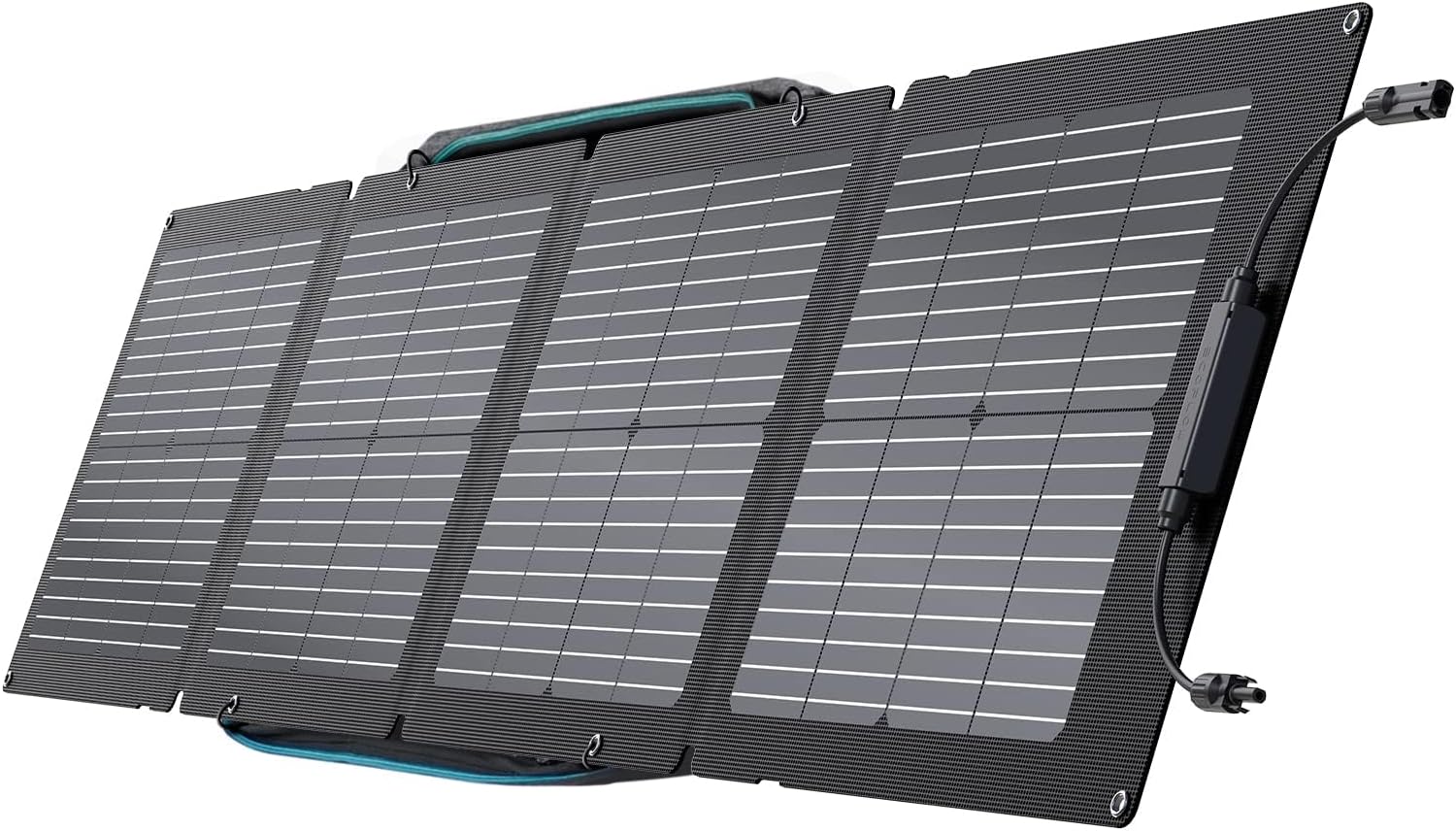
EcoFlow 110W Panel
Foldable, 23% efficiency, IP68. Saves ~$10-18/mo. Great starting point.
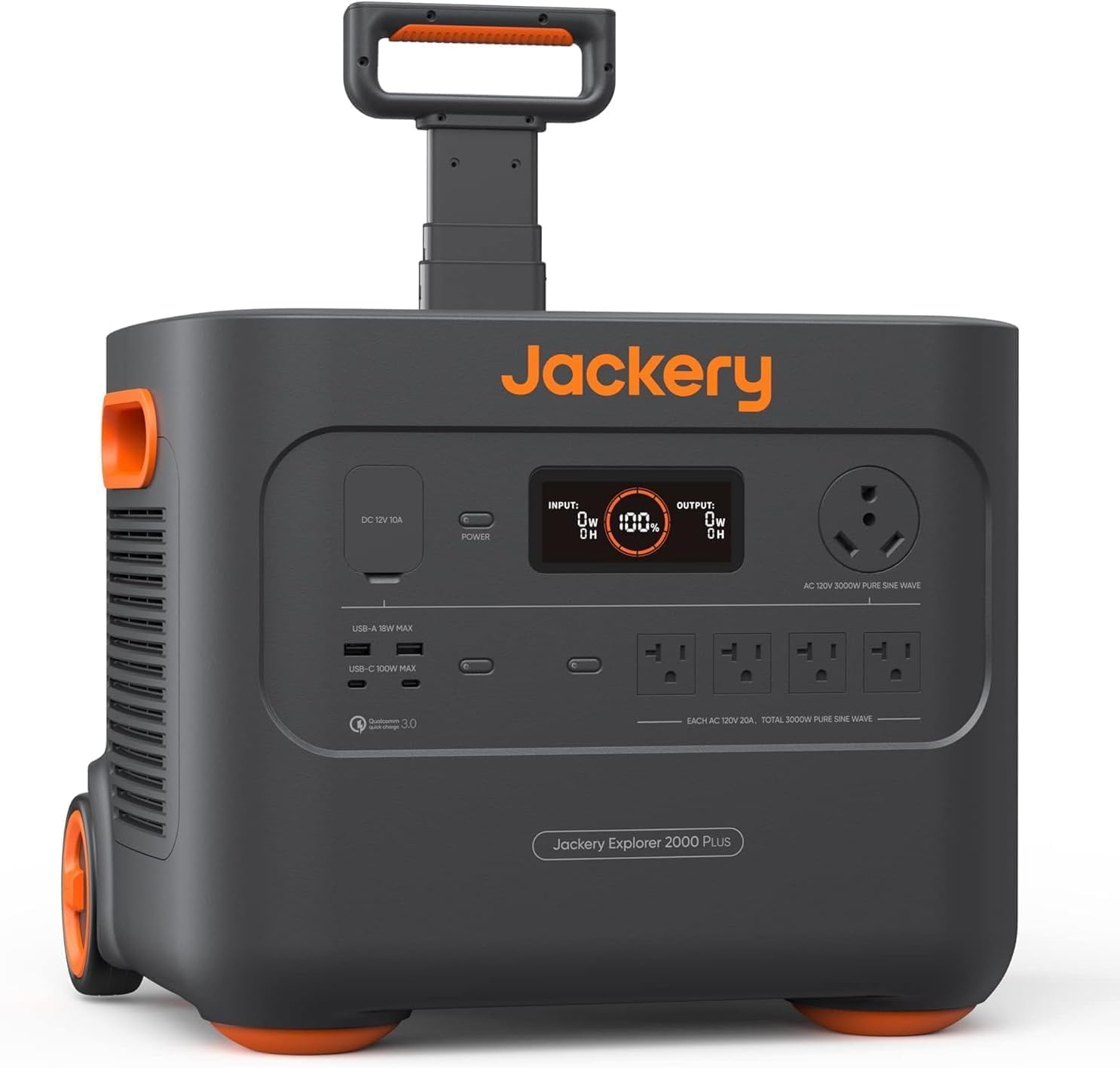
Jackery Explorer 2000 Plus
2042Wh LiFePO4, 3000W. Battery + panel. Saves ~$40-60/mo.
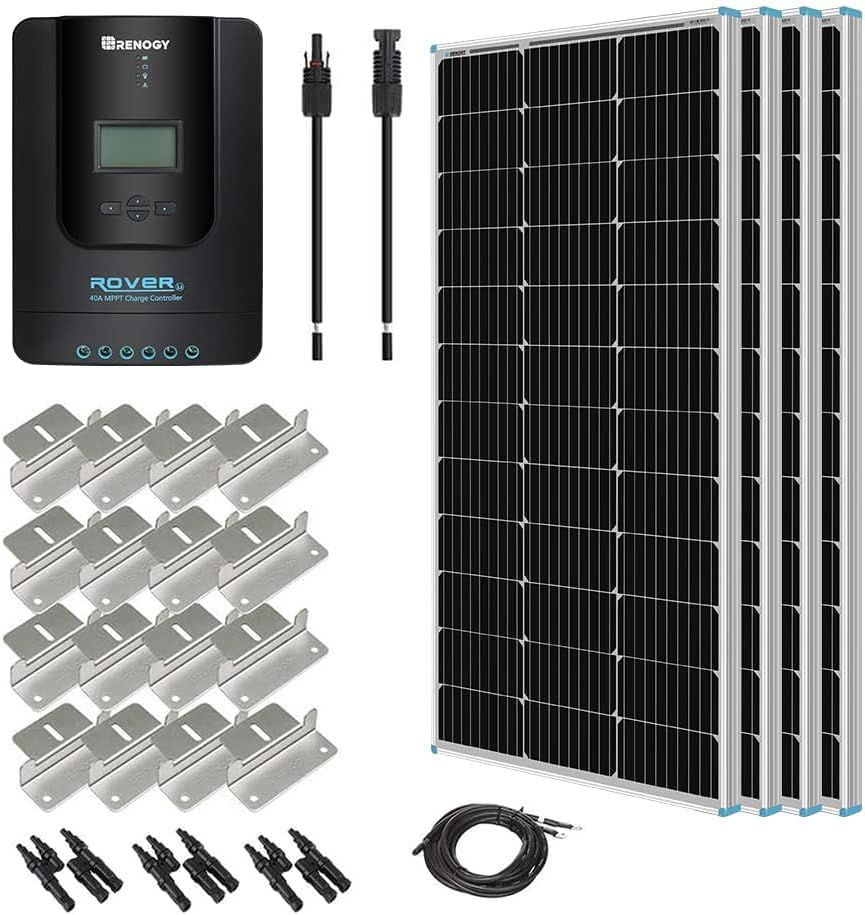
Renogy 400W Starter Kit
4x100W panels + MPPT controller. Most power per dollar. Saves ~$30-50/mo.
Affiliate links support free content. You pay the same price. Full disclosure